
Ola Share in Focus After Promoter Share Sale
The Ola share has been under intense market scrutiny following a significant stake sale by Ola Electric Mobility Ltd’s founder and promoter Bhavish Aggarwal. Over two trading sessions, Aggarwal sold shares worth several crores, triggering heightened investor attention and volatility in the stock. The move comes as the company’s share price remains weak and near historical lows.
Two Tranches of Share Sales by Bhavish Aggarwal
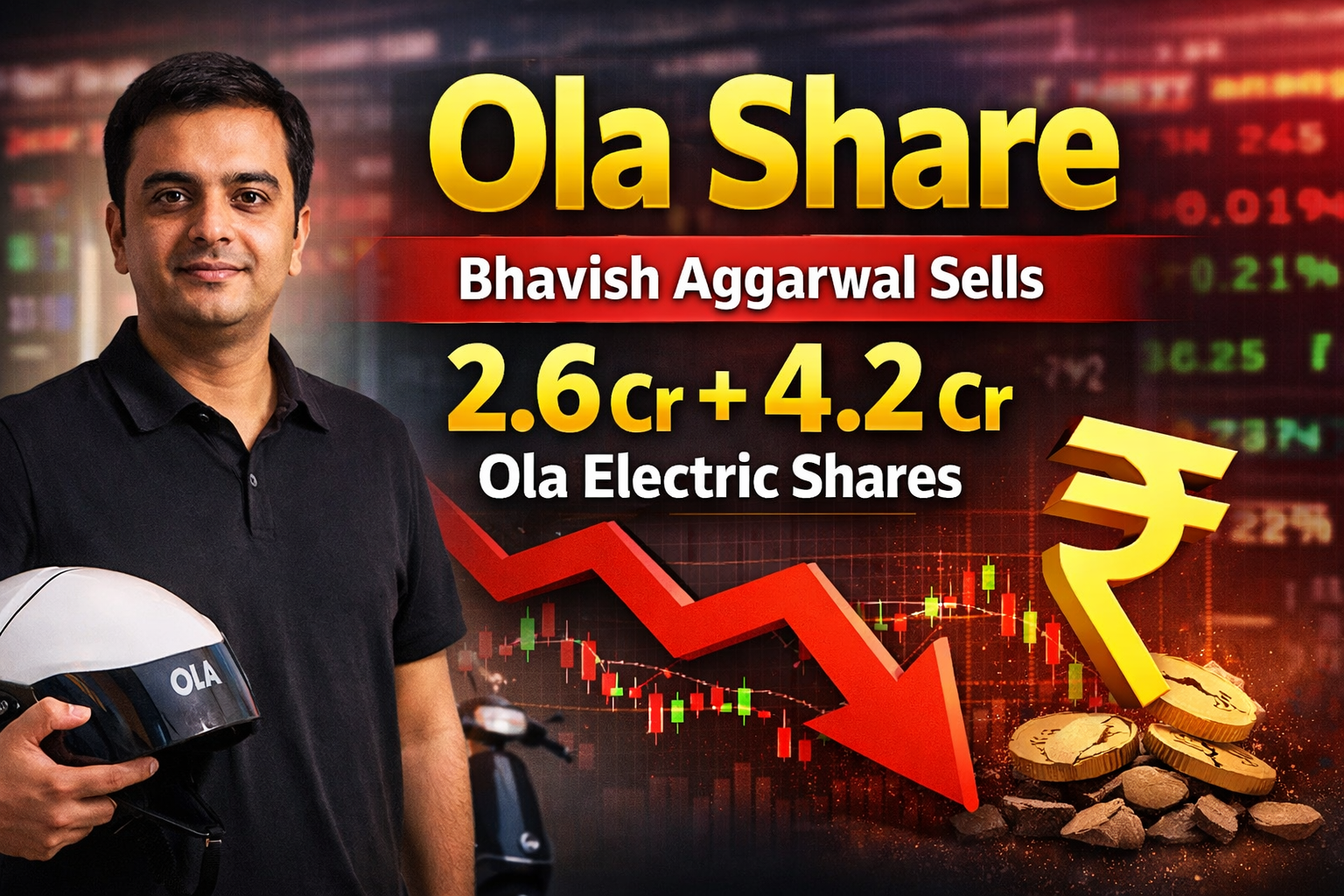
On December 16, 2025, Bhavish Aggarwal executed a bulk deal to sell approximately 2.6 crore Ola Electric shares, raising about ₹92 crore at an average price near ₹34.99 per share. This represented roughly 0.6% of the company’s equity and was confirmed as a personal transaction by the promoter.
The very next day, on December 17, 2025, Aggarwal sold another 4.2 crore shares through open market trades, valued at around ₹142 crore. Together, these two sales total around 6.8 crore Ola share sold within 48 hours, reinforcing concerns among market participants.
According to company statements and exchange filings, the share sales were undertaken by Aggarwal to fully repay a ₹260-crore promoter-level loan and to release shares that had been pledged as collateral against that loan. Pledged shares often carry risks; if share prices fall sharply, lenders can force a sale of pledged stock, which can create additional downward pressure on the share price. By repaying the loan, Aggarwal aims to eliminate this overhang.
Ola Electric clarified that the transactions were limited, personal monetisation moves, with no dilution of promoter control and no change to the company’s long-term strategy. Post these sales, the promoter group is still expected to hold around 34% of Ola Electric, one of the higher promoter holdings among newly listed Indian tech companies.
Market Reaction to the Share Sale
Despite reassurances from the company, the ola share reacted negatively to the news. On December 17, 2025, Ola Electric shares hit fresh record lows, trading around ₹32–₹33 levels before closing the session down by about 5%. The repeated share sales in quick succession contributed to volatility and investor caution.
However, in some sessions, the stock even showed short-lived rebounds as certain investors viewed the reduction of pledged shares as a positive step in reducing risk overhangs on the stock.
Ola Share’s Recent Performance and Broader Context
Ola Electric’s stock has struggled since its listing, trading far below its IPO price of ₹76 and down sharply from earlier peaks above ₹100. Analysts attribute part of this weakness to slowing EV sales growth, heightened competition in the electric two-wheeler segment, and ongoing financial losses in the core business.
The company’s market share in the electric scooter market has also declined from earlier highs, adding to pressure on financial performance and investor sentiment.
What the Promoter Sale Signals
Promoter share sales can mean different things depending on context. In this case, the sale was largely tied to personal financial obligations and the desire to remove pledged shares, rather than a broad exit from the company. Still, investors often interpret large promoter sales — especially when occurring at low stock prices — as a lack of confidence in short-term prospects.
Financial analysts note that removing pledged shares may reduce forced selling risk in the future, but the underlying business fundamentals and growth prospects will ultimately influence the ola share performance.
For retail investors and market watchers, understanding these share sales is key:
The sales were executed at the promoter’s personal level, not by the company itself, and were tied to loan repayment and risk reduction.
Promoter retention of control remains strong, with around 34% stake still held.
The stock remains volatile and near long-term lows, reflecting broader market skepticism and sector challenges.
Investors should continue to monitor Ola share price trends, business performance indicators like quarterly sales and earnings, and broader EV market dynamics before making significant investment decisions.